Semi Trucks
Logistics
Lease & Maintenance
Buy Used Trucks
The real value of a third-party logistics (3PL) company goes beyond merely outsourcing tasks; it lies in its ability to eliminate friction throughout the supply chain.
Companies face mounting pressures from rising service expectations, fluctuating costs, shifting capacities, labor shortages, and rapid technological advancements.
Navigating these challenges requires more than logistical support; it demands a strategic partner capable of delivering comprehensive solutions.
This article examines the end-to-end benefits of partnering with a modern 3PL company, providing real numbers and examples to illustrate their transformative impact.
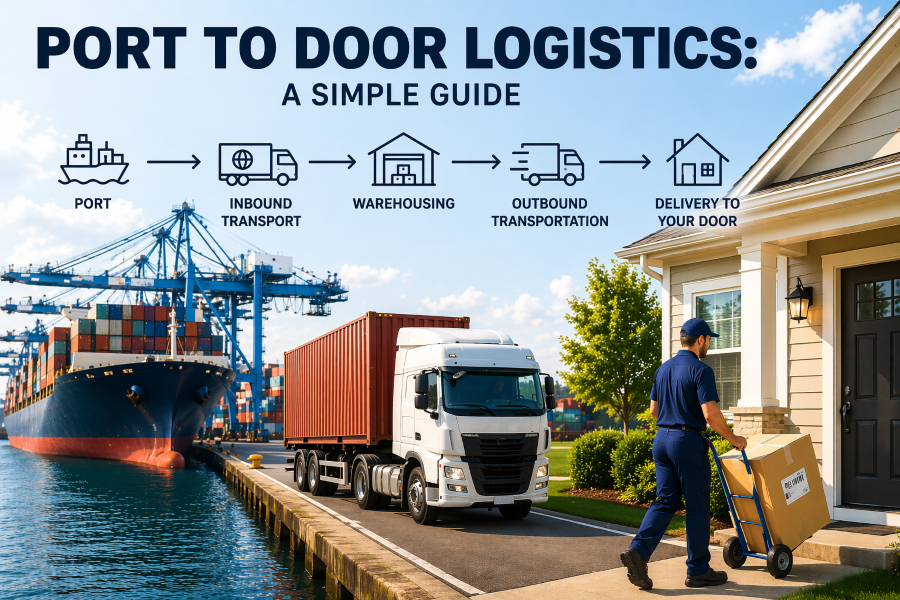
With Ryder's Port2Door™ Solutions, businesses can achieve seamless integration from port pickup to final delivery, or receive targeted support at any point in the chain.
Whether you need full-scale logistics management or specific solutions, our approach helps you optimize logistics at every step of the supply chain for maximum efficiency and success.
Gone are the days when a 3PL company was simply a provider of warehousing and shipping services.
Today, a modern 3PL company encompasses a vast ecosystem of supply chain management and orchestration services. This includes:
By integrating these services with advanced technology and fleet capabilities, Ryder differentiates itself as a comprehensive port-to-door solution provider, offering support throughout the supply chain. Explore the benefits.
Visibility is not just about having a dashboard; it's about reducing surprises, enabling faster decision-making, and improving customer service and communication.
Real-time tracking and collaboration are essential components of this visibility. For example, Southern Glazer’s Wine & Spirits achieved a 98%+ on-time improvement and 100% visibility by leveraging RyderShare™, Ryder’s visibility and collaboration platform.
This level of transparency allows businesses to focus on strategic growth rather than operational hiccups.
One of the most significant advantages of partnering with a 3PL company is the ability to scale operations without the burden of capital investment.
Whether it's peak-season demand, promotional surges, network shifts, or new channel expansions, with a 3PL company, businesses can scale space, labor, transportation capacity, and delivery options without incurring all the fixed costs.
Common trigger events such as rapid growth, new SKU complexity, geographic expansion, service failures, labor challenges, and visibility gaps can be effectively managed through a 3PL partnership.
Ryder’s port-to-door and multi-solution flexibility provide businesses with the scalability they need, whether they require end-to-end solutions or support at specific points in the supply chain.
A robust 3PL company plays a pivotal role in enhancing transportation performance by implementing a range of strategic optimizations.
Whether providing a dedicated fleet of trucks and drivers, or carefully selecting and managing a diverse carrier mix, a 3PL can leverage strengths, ensuring that each shipment travels on the mode and lane best suited to your specific needs.
This strategic approach also helps mitigate risks associated with capacity constraints and market fluctuations.
A 3PL should optimize logistics by streamlining and automating processes. Freight is routed quickly and efficiently, which minimizes delays and boosts the responsiveness of the entire supply chain.
By focusing on on-time performance, a 3PL helps businesses meet their delivery commitments, which is essential for maintaining customer satisfaction and loyalty.
Analyzing and adjusting various cost components, such as freight rates, fuel surcharges, and accessorial charges, means a 3PL can help you reduce transportation logistics expenses while maintaining high service levels.
This financial optimization is crucial for companies looking to improve their bottom line without compromising on service quality.
Dedicated transportation and hybrid transportation solutions offered by 3PLs provide additional layers of stability and reliability. Dedicated transportation ensures that specific resources, like trucks and drivers, are allocated to a your needs, offering predictability and consistency in service delivery.
Hybrid solutions, which combine elements of dedicated carriers and transportation management, offer flexibility and scalability, allowing businesses to adapt to changing demands and market conditions.
A prime example of the impact of these strategies is Hill’s Pet Nutrition, which partnered with Ryder to achieve remarkable results.
By leveraging Ryder's expertise and resources, Hill’s Pet Nutrition was able to scale its operations significantly, achieving 99% on-time deliveries and managing over 45,000 deliveries per month, amounting to more than 132 million pounds of pet food annually.
This level of performance is not only a testament to the effectiveness of Ryder's transportation solutions but also highlights the critical role that a well-managed transportation strategy plays in maintaining customer satisfaction and operational efficiency.
Warehousing is a pivotal component of the supply chain, exposing the delicate balance between cost efficiency and service excellence.
It is at this intersection that businesses must navigate the complexities of inventory management, order fulfillment, and operational efficiency.
Effective warehouse management is not just about storing goods; it involves a series of strategic decisions and processes that ensure products are handled, stored, and dispatched as efficiently as possible.
One of the key elements of effective warehouse management is strategic slotting: determining the optimal placement of products within the distribution center to minimize travel time and maximize picking and packing efficiency.
By analyzing product velocity, demand patterns, and storage requirements, businesses can ensure that high-demand items are easily accessible, reducing the time and labor required for order fulfillment.
Designing efficient routes for pickers to follow significantly reduces the time it takes to assemble orders, increasing throughput and reducing labor costs.
This optimization requires a deep understanding of the fulfillment center layout, product locations, and order patterns, and uses technology to simulate and refine picking routes.
Labor planning is essential for managing the workforce effectively. By forecasting demand accurately and aligning labor resources accordingly, businesses can ensure that they have the right number of staff on hand to meet operational needs without incurring unnecessary labor costs.
This involves not only scheduling but also training and cross-training employees to handle various tasks within the warehouse.
Cycle counts and quality controls are vital for maintaining inventory accuracy and ensuring that products meet quality standards. While a Warehouse Management System (WMS) is a critical tool for managing these processes, it is the execution discipline and engineering expertise that truly drive consistency and reliability in warehouse operations.
A WMS provides the data and functionality needed to manage inventory, track orders, and optimize workflows, but it is the human element, skilled managers and workers, that brings these systems to life.
BJC Health System serves as an example of how effective warehouse management can transform operations.
By partnering with Ryder, BJC leveraged Ryder’s facility and operational expertise to enhance throughput, accuracy, and flexibility in their warehousing operations.
The success of this collaboration demonstrates the significant impact of a well-executed warehouse management strategy on a business's overall performance, highlighting the importance of combining advanced technology with expert execution to achieve operational excellence.
In e-commerce, managing complexity is paramount. Direct-to-consumer sales, retail replenishment, and marketplace service level agreements (SLAs) all require seamless coordination.
Returns management, when done right, serves as a competitive advantage. Ryder’s e-commerce and last-mile capabilities are designed to fit seamlessly within the port-to-door framework, ensuring that businesses can meet rising consumer expectations and protect their brand experience.
As e-commerce continues to grow, the ability to efficiently manage fulfillment and returns becomes a key differentiator in maintaining customer loyalty and satisfaction.
AI and automation are becoming essential criteria for selecting a 3PL partner.
Practical applications of AI in the supply chain include:
According to the NTT DATA 3PL Study, 74% of shippers would consider switching providers based on AI capabilities.
Additionally, the MHI report highlights current AI adoption rates and the expected growth trajectory, emphasizing the importance of partnering with a 3PL that can effectively operationalize technology across industries.
The last mile of delivery is a critical phase in the supply chain where the customer experience is ultimately defined. This stage is not only about delivering a package; it is about delivering a promise of reliability, timeliness, and care.
Flexibility in last-mile delivery is essential to address the varied needs and expectations of customers. This flexibility includes comprehensive regional coverage to ensure efficient deliveries across geographic areas.
It also involves the capability to handle large, bulky items that require special equipment and expertise to transport safely and securely.
Additionally, offering appointment scheduling allows customers to choose delivery times that are convenient for them, enhancing their overall experience and satisfaction.
Returns and haul-away services are also important components of a flexible last-mile delivery strategy. These services provide customers with a convenient return process or the option to have old products removed when new ones are delivered, adding value to the overall service offering.
In today's market, a significant 85% of consumers expect a guaranteed delivery date, while 82% want a specific time window for their deliveries, leaving little room for error.
This heightened expectation is driving swift expansion in the last-mile delivery sector, which is expected to grow to $123 billion by 2030, according to a report by Straits Research.
Ryder’s investment in technology and innovation supports its last-mile delivery capabilities. By leveraging advanced tracking systems, real-time data analytics, and automated processes, through RyderView™, we provide you with the tools you need to enhance visibility and control over their last-mile operations and to proactively communicate with customers, keeping them informed and engaged throughout the delivery process.
Even the most meticulously planned supply chain can encounter significant disruptions if equipment uptime is compromised. Timing and reliability are crucial; any delay or breakdown can have a ripple effect, impacting delivery schedules, customer satisfaction, and ultimately, the bottom line.
By entrusting maintenance tasks to experts, businesses can focus on their core competencies without being bogged down by the complexities of fleet management.
This approach not only alleviates the administrative burden associated with maintenance but also ensures that equipment is serviced by professionals with specialized knowledge and experience.
A third-party logistics company that provides both fleet leasing and maintenance services creates a seamless connection between transportation execution and asset health.
This integration enables a holistic approach to fleet management, aligning maintenance schedules with operational needs to minimize downtime and maximize logistics efficiency.
Ryder SelectCare maintenance offers a comprehensive suite of services. This partnership ensures that fleets are maintained to the highest standards, reducing the likelihood of unexpected breakdowns and enhancing overall reliability.
Our white paper on the benefits of truck leasing provides valuable insights into why this strategy is beneficial for businesses aiming to optimize their logistics operations. Leasing offers financial flexibility to allocate capital more effectively and avoid the substantial upfront costs associated with purchasing vehicles.
Outsourcing maintenance to a 3PL like Ryder not only improves equipment uptime and reliability but also allows businesses to focus on strategic growth initiatives.
By integrating fleet leasing and maintenance services, companies can achieve a more efficient and cost-effective logistics operation, boosting their competitive edge in the market.
What is a 3PL company?
A 3PL company, or third-party logistics provider, offers outsourced logistics services, including transportation, warehousing, and supply chain management.
What are the benefits of using a 3PL company?
Benefits include improved scalability, enhanced visibility, optimized transportation performance, efficient warehouse management, and advanced technology integration.
How do I choose the right 3PL company?
Consider factors such as service offerings, technology capabilities, industry expertise, scalability, and alignment with your business goals. Read more about finding the right 3PL.
What services do 3PL companies provide?
Services include transportation management, warehousing, e-commerce fulfillment, last-mile delivery, supply chain visibility, and fleet leasing and maintenance.
Can a 3PL company handle transportation and warehousing?
Yes, a comprehensive 3PL company like Ryder can manage both transportation and warehousing, providing integrated solutions for end-to-end supply chain management.
How do 3PL companies use AI and automation?
AI and automation are used for demand forecasting, route optimization, labor management, exception handling, and enhancing overall supply chain efficiency.
What’s the difference between a 3PL company and a 4PL?
A 3PL company provides logistics services, while a 4PL acts as a logistics integrator, managing the entire supply chain on behalf of the client. Read more about differences between a 3PL and 4PL.
To truly understand the value a third-party logistics (3PL) company can bring to your business, it's essential to measure performance using well-defined key performance indicators (KPIs).
These metrics provide a quantitative basis for evaluating the effectiveness of your logistics operations and the impact of your 3PL partnership.
Another important KPI is customer experience, including Net Promoter Score and Customer Satisfaction, which are critical indicators of how customers perceive your service. High scores in these areas reflect positive customer experiences and can lead to increased loyalty and repeat business.
By closely monitoring these KPIs, businesses can effectively measure the benefits of their 3PL partnerships, identify areas for improvement, and make data-driven decisions to enhance their logistics operations.
Ryder distinguishes itself as a leader in the third-party logistics (3PL) industry through its comprehensive end-to-end port-to-door solutions.
This approach encompasses a full spectrum of services to deliver a seamless experience that enhances logistics efficiency and reliability throughout the supply chain.
What sets Ryder apart is its commitment to leveraging cutting-edge technology to drive logistics excellence. This technology-driven approach not only optimizes logistics operations but also enhances customer satisfaction by providing transparency and reliability.
Whether your business requires full-scale logistics support or targeted solutions at specific points in the supply chain, Ryder's expertise ensures that your operations are finely tuned for success.
Their ability to adapt to diverse industry needs and deliver tailored solutions makes Ryder a trusted partner for businesses seeking to enhance their logistics capabilities and achieve long-term growth.
Ready to transform your supply chain? Reach out to an expert today to assess your network and explore Ryder Port2Door™ logistics solutions.