Logistics
Warehousing & Fulfillment
Transportation
E-commerce
E-commerce Fulfillment Services
Lease & Maintenance
Semi Trucks
Supply Chain Technology
Fleet Management Technology
Logistics
E-commerce
Lease & Maintenance
Buy Used Trucks
2025 is coming to an end, and unlike volatile years past, it has shown clearer signs of steady momentum in supply chains. Demand reduced across several sectors, especially in consumer discretionary categories, while essential goods and B2B channels stayed steady.
DAT Freight & Analytics noted that truckload spot rates were near multi-year lows early in the year, with some tightening by Q3 as inventories balanced out. Many manufacturers shifted from large transformation programs to smaller upgrades in automation, forecasting tools, and connectivity.
Construction activity also increased, driven by AI data centers, cold storage sites, and advanced manufacturing facilities. These projects added pressure through heavy site traffic, limited staging space, sequencing challenges, and delays tied to power connections.
Omnichannel networks continued to evolve and labor availability improved slightly, though cost pressure remained across warehousing and transportation. These supply chain trends serve as the foundation for the upcoming year.
As enterprises look toward 2026, the focus will shift to practical, high-impact improvements across supply chain operations, from transportation and warehousing to technology and partner strategy. Networks will need to be shorter and more flexible, and supply chain visibility tools will become essential. Automation will expand across more touchpoints, and organizations will rely more on strategic partners to help them adapt quickly.
In this article, we’ll outline the main trends shaping that shift and how supply chain teams can operate with more agility in the year ahead.
As supply chains settled into a more predictable rhythm in 2025, several clear themes shaped performance across transportation, warehousing, technology, and project logistics.
Below is a brief overview of the developments that had the greatest impact on operations throughout the year.
According to Ryder’s Monthly State of Transportation Report, freight markets saw notable softness in 2025, especially in truckload and LTL. National volumes stayed low, but regional differences stood out. Lanes in the Southeast, Texas, and the Mountain West tightened as construction and manufacturing activity increased. The late-2025 updates showed early signs of rate normalization, with capacity starting to rebalance and expectations of firmer rates heading into 2026.
Regionalization gained momentum. Retailers and manufacturers continued investing in regional distribution centers to shorten route lengths, improve replenishment speed, and maintain service levels in a year marked by uneven demand. Nearshoring trends, especially in Mexico, also shaped U.S. distribution center placement as companies worked to strengthen cross-border supply nodes.
2025 was a clear turning point for supply chain technology trends. Reports showed rapid growth in AI adoption across logistics, including demand forecasting, agentic AI for planning, digital twins for scenario modeling, and expanded edge computing to support robotics, telematics, and real-time data solutions. Companies invested heavily in connectivity tools such as 5G, private LTE, and IoT sensors to improve uptime across warehouses, fleets, and construction sites.
AI-focused data center construction, exposed new constraints in project logistics. Many sites face bottlenecks in power availability, specialized equipment delivery, and tight site access. Large projects often required hundreds or even more than 1,000 deliveries per day, yet staging space remained limited.
The 3PL market continued to grow as companies outsourced more operational complexity, including omnichannel fulfillment, returns processing, and project logistics. Research from Data Insights Market noted rising consolidation among large 3PLs, which are providing shippers with broader networks, integrated technology platforms, and more consistent service.
With 2026 fast approaching, companies should prepare for a gradual shift in market conditions. Freight pricing is expected to see a modest recovery, with contract truckload rates firming first and capacity tightening in regions experiencing strong construction or manufacturing activity.
Manufacturers across industries will continue investing in targeted automation, robotics, edge computing, and decision intelligence tools to support faster, more flexible operations.
In 2026, you can expect:
With 2026 bringing new operational demands, several domain-specific trends are already shaping how companies will manage their networks in the year ahead.
Below is a closer look at what supply chain leaders should expect.
Regionalization continues to reshape U.S. distribution footprints as companies move inventory closer to end users to improve delivery speed, order accuracy, and overall customer experiences. Many companies are moving away from a small number of large national hubs and shifting toward multi-node regional networks that place inventory closer to end users.
Micro fulfillment centers, often dock-ready spaces or smaller warehouse footprints, are becoming more common in both retail and e-commerce environments.
Flexible real estate strategies became essential in 2025, and this need will only intensify in 2026. Companies are prioritizing shorter lease terms, pop-up capacity, and scalable space models that let them adjust quickly to seasonality or construction project timelines. Blended-use spaces, where retail pickup, e-commerce fulfillment, and replenishment happen under one roof, are also appearing more frequently.
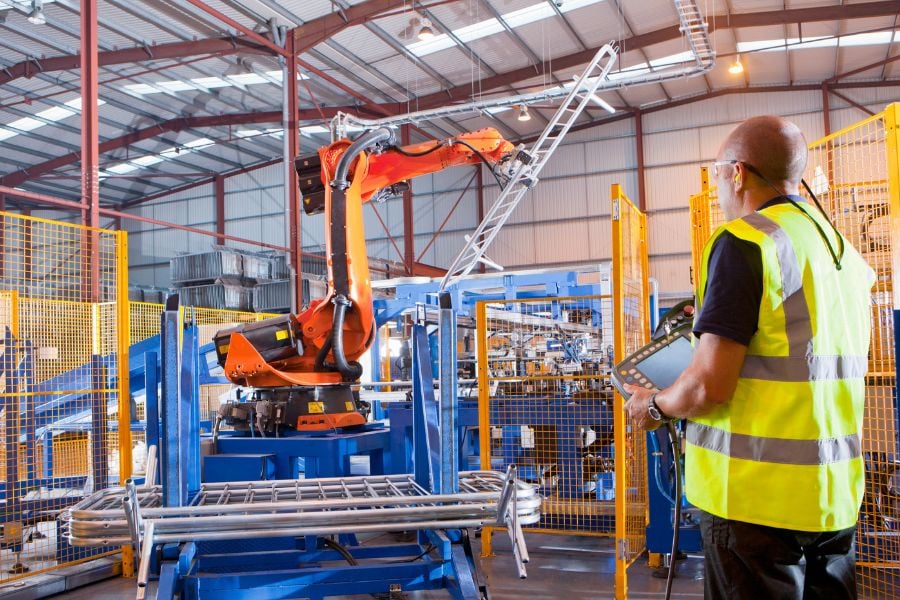
Automation is shifting from a nice-to-have to an essential value. Rather than replacing labor entirely, most companies are using automation to support their workforce through autonomous mobile robots, goods-to-person systems, put-wall technology, and AI-enabled WMS optimization.
According to McKinsey, targeted automation deployment can improve throughput by 20–40% and reduce picking travel time by up to 60%.
Inventory strategy is evolving as well. Companies are adopting segmented safety stock models for critical SKUs across healthcare, construction, and manufacturing. Dynamic inventory placement will be a core requirement for responsive omnichannel networks in 2026.
Truckload capacity is expected to tighten selectively in 2026. Many of the lane imbalances created during the soft 2025 market are easing, which should help stabilize rates and may lead to increases in high-demand regions. Intermodal could regain relevance for longer-haul shipments as rail capacity improves and fuel prices continue to fluctuate.
LTL carriers introduced several rate increases in 2025 due to cost pressure and network consolidation. According to industry experts, this trend is likely to continue, putting additional strain on LTL and parcel pricing.
The impact will be felt most by omnichannel retailers managing split shipments, returns, and last-mile costs.
Large construction projects, including AI data centers, life sciences facilities, and advanced manufacturing sites, will continue to drive strong demand for specialized logistics support.
These projects depend on tightly controlled delivery windows, on-site staging, lift coordination, and drivers who understand strict site protocols. It is common for these sites to require 300 to more than 1,000 deliveries per day, making synchronized execution and real-time communication essential.
In 2026, supply chains will place greater emphasis on agentic AI systems that support automated decision-making, optimize dispatching, forecast demand more accurately, and adjust pricing in real time.
AI-enabled forecasting alone can reduce stockouts by up to 50% while lowering overall supply chain costs by up to 10%, making it one of the most impactful tools for operational efficiency.
Digital twins are quickly becoming a core part of network modeling and operational planning. Companies use them to run “what-if” scenarios for events such as weather disruptions, demand spikes, or temporary site shutdowns, then adjust their network flows or contingency plans with more confidence.
Edge computing is also becoming essential for real-time decision-making. Robotics-heavy warehouses, smart construction sites, and fleets with advanced telematics all depend on low-latency connectivity.
As a result, more companies are investing in private 5G, IoT sensors, and machine-to-machine communication across transportation and distribution environments.
Cybersecurity and data governance are also moving to the forefront as digital footprints expand. Multi-state compliance, cross-border data flows, telemetry security, and vendor-integrated systems require proactive risk management and structured incident response planning to reduce exposure and maintain operational continuity.
With these supply chain trends taking shape across transportation, warehousing, technology, and data, each industry will feel the impact differently.
The following breakdown highlights how key sectors should expect their operations, networks, and priorities to shift in 2026:
A modern 3PL is no longer just a service provider: It’s an operational partner that helps companies adapt faster, build resilience, and lower execution risk.
Our national footprint, technology ecosystem, and scale make it a dependable ally for supply chain leaders preparing for the demands of 2026.
Supply chain managers can use the following checklist to prioritize the most meaningful actions for early 2026.
These steps range from quick operational fixes to strategic initiatives that may take several months to implement.
A major high-tech customer faced an aggressive build schedule for a new AI data center that required more than 1,000 deliveries per day at peak.
The site had limited access points, tight staging space, and strict sequencing tied to power-connection milestones, creating daily risks of congestion and missed deadlines.
Ryder stepped in to manage the delivery flow. The team introduced pre-scheduled delivery windows, set up off-site staging, coordinated lift and crane services, and deployed dedicated on-site logistics crews to guide drivers and manage ground movement.
With real-time ETA visibility and structured driver training, the project reduced congestion, reduced missed delivery windows, and met its critical in-service milestone with fewer change orders and lower cost overruns.
As 2026 approaches, supply chain trends will be shaped by practical investments, shorter and more flexible networks, targeted automation, improved visibility, and greater regulatory preparedness.
Companies that combine thoughtful planning with partner-led execution will be best positioned to manage shifting demand, tightening capacity, and rising operational complexity.
Ryder offers the scale, technology, engineering expertise, and national network needed to help companies redesign distribution footprints, optimize transportation, support large construction and AI data center projects, and build the flexibility required for the year ahead.
If you want to stress-test your network or explore customized 2026 solutions, feel free to get in touch to evaluate options and build a more resilient, agile supply chain.