Logistics
Warehousing & Fulfillment
Transportation
E-commerce
E-commerce Fulfillment Services
Lease & Maintenance
Semi Trucks
Supply Chain Technology
Fleet Management Technology
Logistics
E-commerce
Lease & Maintenance
Buy Used Trucks

Supply chains are undergoing a profound transformation. The traditional model, once characterized by linear, siloed, and reactive processes, no longer meets the demands of today's dynamic market environment.
The new standard for supply chain management requires a connected, dynamic, and real-time approach that goes beyond mere efficiency. It is about achieving perfection through a technology-driven supply chain that provides enhanced visibility, control, and execution.
Ryder, a leader in supply chain management, is at the forefront of this transformation, offering integrated solutions that redefine supply chain optimization for the supply chains the economy depends on.
The traditional supply chain model, which has served businesses for decades, is increasingly showing its limitations in the face of modern challenges.
Fragmentation is a significant issue, with multiple vendors and disconnected systems leading to inefficiencies and delays. This fragmentation results in lagging data, which in turn causes delayed decision-making.
In an era where demand swings and disruptions are increasingly common, such delays can be costly.
Per a recent industry report from Gartner, a significant percentage of companies lack end-to-end visibility, which is crucial for timely and informed decision-making.
The report emphasizes that in today’s complex global landscape, leveraging technology and data-driven insights is essential for comprehending and managing geopolitical risks.
Complete visibility allows organizations to stay connected with real-time supply chain developments, extract deeper insights, and develop decision models that enable quicker responses to emerging divergences.
By proactively managing risks, supply chains can better prepare for uncertainties. Creating forward-looking "what if" scenarios helps identify potential risk events that may necessitate adjustments in the supply chain.
Organizations should conduct scenario analyses regularly, particularly when evaluating their network footprint or devising a new supply chain strategy.
The old model's reliance on reactive strategies means companies often find themselves playing catch-up, responding to issues only after they have occurred.
This reactive approach is no longer enough in a world where consumer expectations are higher than ever, and business speed is accelerating.
The inability to anticipate and respond to changes in real-time leads to missed opportunities, increased costs, and a loss of competitive advantage.
As the global economy becomes more interconnected and complex, the limitations of the traditional supply chain model become increasingly apparent, necessitating a shift toward a more proactive, integrated approach.
Perfecting the supply chain requires a comprehensive framework that emphasizes real-time visibility, integrated transportation and warehousing, scalable capacity, and data-driven decision-making:
Hill’s Pet Nutrition collaborated with Ryder to enhance their transportation network, facilitating the expansion of more than 45,000 monthly deliveries throughout North America.
By entrusting their logistics to Ryder, Hill’s benefited from a dedicated fleet, premium transportation management, and RyderShare™ technology, which resulted in 100% real-time visibility that greatly improved supply chain efficiency.
This strategic partnership allowed Hill’s to not only optimize their logistics operations but also sustain robust customer relationships, fostering innovation and excellence.
The shift from hindsight to foresight is now the gold standard of modern supply chain management.
This transition involves moving from manual to automated workflows, where technology plays a pivotal role in orchestrating operations. Siloed systems are replaced by orchestrated networks that facilitate seamless communication and collaboration.
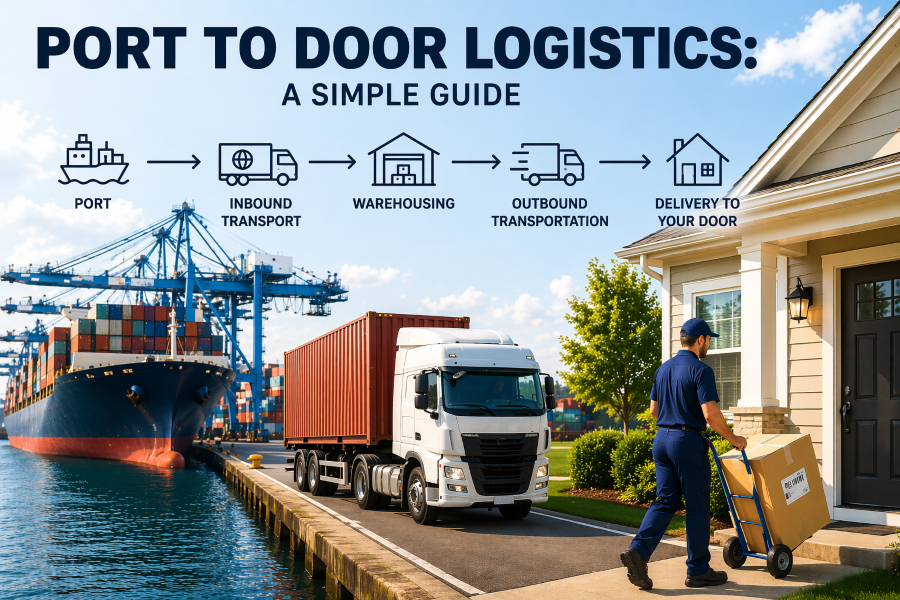
RyderShare exemplifies this shift, offering a port-to-door concept that integrates every stage of the supply chain into a cohesive, real-time operation.
By leveraging cutting-edge technology, organizations can anticipate challenges and respond with agility, ensuring uninterrupted service and customer satisfaction. The move towards real-time, connected operations allows companies to break down silos and create a more collaborative and efficient supply chain.
This approach not only improves operational efficiency but also enhances the customer experience by ensuring that products are delivered on time and in perfect condition.
The benefits of real-time, connected operations extend beyond operational efficiency. Enabling companies to anticipate and respond to market changes provides a significant competitive advantage.
Companies that can see, act, and adapt in real-time are better positioned to capitalize on new opportunities, mitigate risks, and deliver superior value to their customers.
As the pace of business continues to accelerate, the ability to operate in real-time will become increasingly critical to success.
Leading companies are embracing this new paradigm by investing in technology and forming strategic partnerships. They are moving toward fewer, integrated providers to streamline operations and reduce complexity.
Prioritizing customer experience is central to their strategies, as they recognize that a seamless supply chain directly impacts customer satisfaction and loyalty.
By adopting a real-time, connected approach and offering port-to-door solutions, these companies are not only enhancing their operational efficiency but also gaining a competitive edge in the market.
They understand that in today's fast-paced economy, the ability to deliver products quickly and reliably is a key differentiator.
Leading companies are forming strategic partnerships with key suppliers and logistics providers who have invested heavily in technologies such as artificial intelligence, machine learning, and the Internet of Things (IoT) to enhance their supply chain capabilities.
These technologies enable companies to gather and analyze vast amounts of data in real time, providing insights that drive smarter decision-making.
For example, predictive analytics can help companies forecast demand more accurately, allowing them to optimize inventory levels and reduce waste.
IoT devices can provide real-time shipment tracking, improving visibility and allowing for more precise delivery estimates.
By leveraging these technologies, leading companies create agile and responsive supply chains that adapt quickly to changing market conditions.
Such partnerships mean companies share data and collaborate more effectively, leading to improved coordination and better overall performance. A more resilient and reliable supply chain can withstand disruptions and deliver superior value to its customers.
With the rise of automation and technology platforms for tracking orders and inventory, e-commerce brands face the challenge of delivering perfect orders while optimizing for efficiency and cost.
Mugsy, a digitally-native apparel retailer, experienced issues with unreliable partners and fulfillment errors. However, after switching to Ryder for e-commerce fulfillment, Mugsy now delivers exceptional experiences, with 99.5% of customers satisfied.
For Mugsy, achieving the perfect order required Ryder's excellence in transparency, customization, reliability, and cost.
Ryder's rate selection tool helped manage parcel costs, enabling Mugsy to innovate through initiatives such as promotional packaging and dynamic sales launches.
Fulfillment is a significant expense for Mugsy, and Ryder's partnership allows for agile decision-making and continuous value delivery, creating a more resilient and reliable supply chain that can withstand disruptions and deliver superior value to customers.
Ryder plays a crucial role in helping companies perfect their supply chains through end-to-end solutions that encompass every aspect of logistics and transportation.
The technology layer integrates seamlessly with existing systems, offering unparalleled visibility and control. Operational expertise ensures that every component of the supply chain is optimized for maximum efficiency and effectiveness.
Our solutions are designed to address the unique challenges of modern supply chains, providing companies with the tools they need to succeed in a real-time economy.
By offering a comprehensive suite of services, including transportation management, warehousing, and distribution, Ryder enables companies to streamline their operations and reduce complexity.
This integrated approach allows companies to focus on their core business while Ryder handles logistics, ensuring products are delivered on time and in perfect condition.
As part of a strategic overhaul of its supply chain, Southern Glazer’s Wine & Spirits partnered with Ryder to enhance its inbound transportation and deploy RyderShare™.
This solution brought substantial improvements in visibility, accountability, and efficiency across Southern Glazer’s supply chain, transforming its operations and enhancing collaboration with suppliers and carriers through real-time insights.
The results? A 50% increase in productivity. Labor efficiency savings and decreased turnover. Improved customer service through data accuracy.
This case study highlights the impact of a dynamic, solution-oriented partnership driving continuous improvement.
The companies that will succeed in today's economy are those that can see, act, and adapt in real time. The new standard for supply chains is not just about efficiency; it is about achieving perfection through visibility, control, and execution.
Ryder's integrated, technology-driven solutions provide the foundation for this transformation, enabling companies to navigate the complexities of modern supply chains with confidence and agility.
As the economy continues to evolve, those who embrace this new standard will lead and succeed.
Feel free to get in touch to learn more about how Ryder can ensure your supply chains are not only efficient but resilient and responsive in real time.