Logistics
Warehousing & Fulfillment
Transportation
E-commerce
E-commerce Fulfillment Services
Lease & Maintenance
Semi Trucks
Supply Chain Technology
Fleet Management Technology
Logistics
E-commerce
Lease & Maintenance
Buy Used Trucks
Key Takeaways
A transportation rate tells you what a shipment costs. It doesn’t tell you what it takes to keep your entire network running.
For logistics leaders, that means dependable capacity and delivery performance. For finance leaders, it means understanding equipment, labor, fuel, downtime, and the capital tied up in fleet operations.
Dedicated transportation brings those decisions together. You define the service your customers need, while an expert provider manages the resources that deliver it.
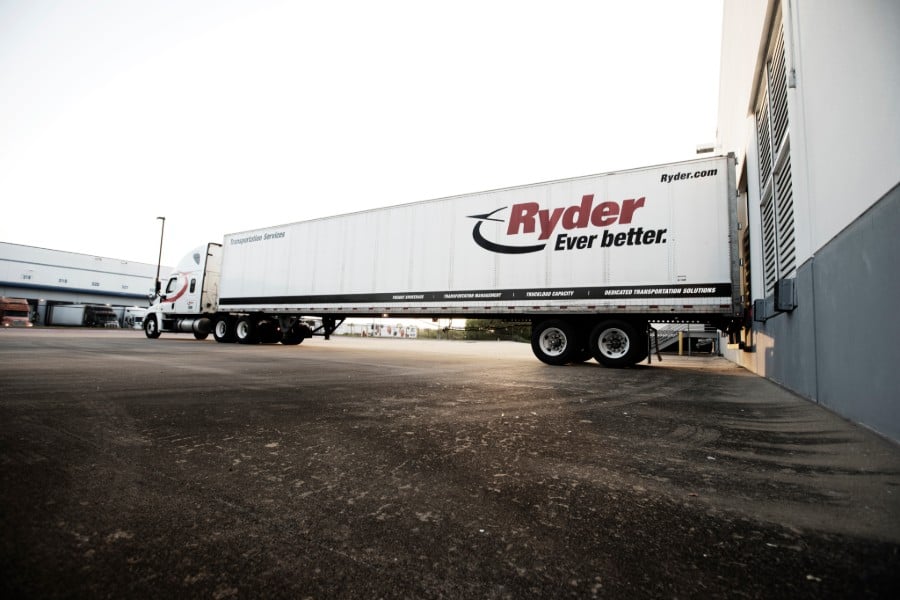
Dedicated transportation is a model in which a provider assigns and manages vehicles, drivers, and daily transportation operations for a specific customer under contract.
The operation is built around your freight, routes, delivery windows, and service standards. The agreement defines the committed capacity and each party’s responsibilities.
With a private fleet, your business owns or leases vehicles and manages the operation, even if you outsource selected functions. Common carriers serve multiple shippers without necessarily reserving equipment and drivers for one customer.
The distinction is who runs the operation. Leasing or owning vehicles alone doesn’t transfer driver management or daily transportation responsibilities to a provider.
A dedicated solution begins with network design, then moves into staffing, launch, and ongoing performance management. The design should reflect actual demand and service requirements.
Start with shipment history, origins and destinations, delivery windows, freight characteristics, and seasonal peaks. Add current costs, empty miles, downtime, and missed-service data.
This baseline shows where committed capacity could help and where flexibility matters more. Include transportation, finance, and customer-service teams so the analysis captures both cost and delivery consequences.
Choose vehicle types, specifications, route schedules, and staffing around the work. Too much equipment raises the cost of unused capacity; too little leaves gaps when demand rises.
Work with the provider to set how to accommodate growth, peak periods, specialized handling, and backup capacity. Agree on lead times and pricing before those needs become urgent.
Drivers need training on your products, facilities, delivery procedures, and customer expectations. A transition plan should also address existing employees, equipment, systems, and service continuity.
Ryder’s Lennox case study describes customized commercial trucks and drivers hired and trained specifically for the business. That preparation supports delivery requirements for heating and cooling equipment.
The provider manages dispatch, scheduling, driver support, maintenance coordination, and exceptions within the agreed scope. Your team reviews performance and approves changes to service requirements.
According to Ryder’s Hill’s Pet Nutrition case study, the partnership supports more than 45,000 monthly deliveries across North America. Dedicated capacity and shared visibility help support that distribution network.
The models differ in how you secure capacity, direct service, and allocate operating responsibilities. The comparison below describes typical arrangements; individual contracts can vary.
| Factor | Dedicated Transportation | Private Fleet | Common Carrier |
| Control | You set service standards | High direct control | Carrier controls execution |
| Equipment | Provider supplies/managers | You own or lease | Carrier supplies |
| Drivers | Provider hires/manages | You hire/manage | Carrier hires/manages |
| Capacity | Committed to your operation | Tied to your fleet | Depends on carriers availability |
| Maintenance | Provider manages | You manage or outsource | Carrier manages |
| Capital Requirements | Less direct fleet investment | Varies: owned or leased | Little direct fleet investment |
| Cost predictability | Predictable monthly payment | Operating costs vary | Contract or spot rates |
| Risk/liability | Provider takes on burden of risk | You take on all risk | Carrier runs its operation |
| Scalibility | Changes by agreement | Add assets and staff | Subject to market capacity |
| Visibility | Agreed systems and reporting | You control your systems | Varies by carrier |
A provider can offer both dedicated and common carrier services if the provider also has a transportation management solution. The distinction here is reserved resources versus capacity shared across customers.
Ryder’s fleet ownership, leasing, and dedicated comparison explores these tradeoffs further. Leasing equipment can still leave your business operating a private fleet.
Dedicated transportation works best when its capabilities solve specific operating problems. Evaluate each benefit against your current service and cost baseline.
A provider can match vehicle specifications and fleet size to your routes, payloads, and delivery sites. That helps avoid paying for equipment that’s poorly suited to the work.
Branded vehicles and customer-specific handling procedures can preserve your company’s presence at delivery. Review replacement schedules and how changing freight requirements would affect the fleet.
Assigned vehicles and drivers give recurring routes a planned capacity base. You depend less on finding an available carrier for each shipment.
That commitment has boundaries. Define normal volumes, peak-season requirements, backup resources, and the notice needed to expand or reduce service. Capacity changes still require planning.
The provider takes on recruiting, onboarding, training, scheduling, and retention within the agreement. At Ryder, this can include transitioning your current drivers to your Ryder dedicated transportation solution. Your team gains support for work that can otherwise consume substantial management time.
Customer-specific training should cover product handling, delivery-site rules, and service standards. Ask how vacancies, absences, and turnover are covered so staffing changes don’t undermine reliability.
Driver qualification, hours-of-service compliance, equipment condition, and incident response all need consistent oversight. A provider can bring established processes and specialist support to those responsibilities.
Your provider also takes on the burden of risk and liability.
Maintenance is scheduled and completed by the provider when your vehicles are down. This allows your vehicles to have maximum uptime and be ready when your loads need to be moved.
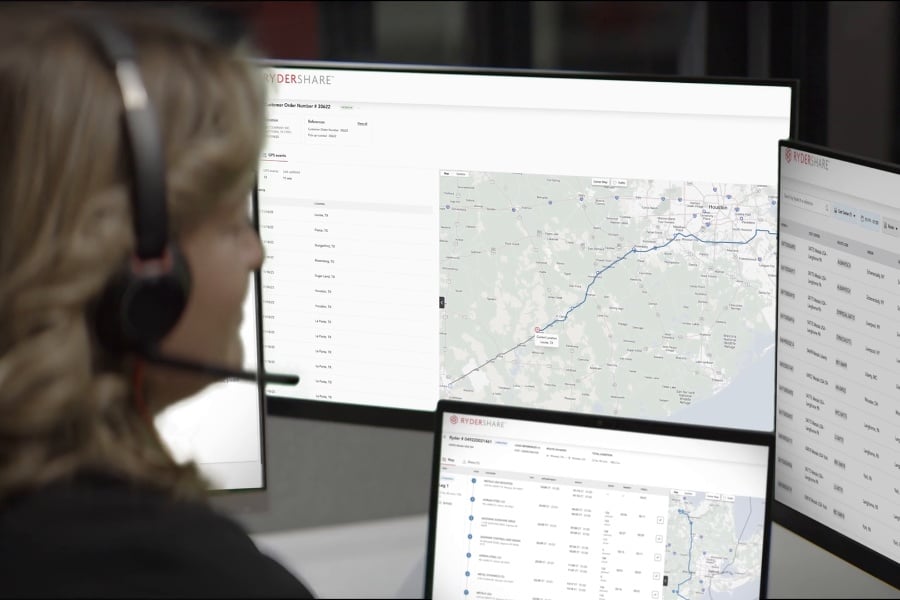
RyderShare™ connects shipment visibility with collaboration and exception management. Shared information helps your team and the provider respond to exceptions and coordinate the next action.
Ryder’s published Do it Best case study reports a 50% productivity increase, 100% freight-movement visibility, and 35% labor efficiency savings. The partnership includes dedicated transportation and RyderShare™.
Those results illustrate what coordinated transportation and technology can achieve, rather than predicting savings for another network.
A dedicated agreement can consolidate equipment, labor, maintenance, and management into a defined service arrangement. That gives finance teams a clearer view of covered costs.
Compare the full cost of delivering the same service under each model. Use consistent shipment volumes, routes, delivery standards, and time periods so the results are meaningful.
Ryder’s dedicated transportation TCO calculator addresses direct and indirect expenses, routing, fuel, and utilization. Use your own operating data to assess the economics of a proposed program.
What you need to calculate includes direct spending and costs absorbed elsewhere in the business. Group the baseline into these categories:
Avoid double-counting acquisition, depreciation, and lease costs. Use a consistent financial method, and identify which current costs would actually disappear after a transition.
Dedicated pricing reflects the equipment, staffing, mileage, routes, and service required. Separate fixed capacity commitments from usage-based charges and any pass-through expenses.
Before comparing proposals, clarify:
Identify costs your business will retain, such as internal oversight or facilities. Add them to the proposed service cost so the comparison doesn’t overstate savings.
A private fleet generally bears fuel-price and consumption changes directly. Common carriers may use surcharges, while dedicated agreements can specify how fuel costs pass through to the shipper.
A predictable base charge doesn’t necessarily mean a fixed fuel bill. Ask who buys fuel, which index or formula applies, how often charges change, and who benefits from efficiency gains.
Test the comparison under higher and lower fuel prices. Route improvements can reduce consumption, but they don’t remove exposure to the price of each gallon.
Start with annual operating value: current comparable costs minus proposed dedicated charges and retained costs. Then account for transition spending and any measurable service improvements.
If the change requires a one-time investment, estimate its payback using verified annual net savings. Keep asset-sale proceeds separate from recurring savings, and avoid counting the same benefit twice.
Track financial and service results together:
For each measure, set a baseline, target, definition, and review cadence. Better utilization has financial value only if it lowers spending or frees capacity your operation can use.
Dedicated transportation can fit recurring freight, consistent routes, specialized equipment needs, and demanding delivery schedules. It isn’t limited to the largest enterprises; route economics and utilization matter more than company size.
Ask whether your current model reliably supports the work:
Retail, industrial and automotive manufacturing, food and beverage, energy, e-commerce, and distribution networks can have these needs. The assessment should focus on the specific routes and service requirements, not an industry label.
A dedicated program should connect your capacity, service standards, and financial goals. Ryder brings equipment, professional drivers, maintenance, technology, and transportation management together around those requirements.
Explore Ryder Dedicated Transportation Solutions and talk with a Ryder expert about your routes, service needs, and total operating costs.
Dedicated transportation assigns provider-managed vehicles, drivers, and operating resources to a specific customer under contract. The program is designed around that customer’s freight network and service requirements.
Dedicated transportation reserves resources for your operation. Common carriers serve multiple shippers through a shared network, with capacity and service governed by the carrier arrangement.
Benefits can include committed capacity, consistent service, customer-specific equipment and drivers, maintenance support, and shared visibility. The provider also takes on agreed fleet-management responsibilities.
It can suit businesses with recurring routes, usable freight density, specialized handling, or demanding delivery standards. Fit depends on network needs and economics, rather than company size alone.
Pricing reflects equipment, staffing, mileage, service levels, and other operating requirements. Contracts should define fixed and variable charges, fuel treatment, capacity commitments, adjustment rules, and exit terms.
The provider manages recruiting, training, scheduling, and retention within the agreed scope. Ask about vacancy coverage and driver continuity; outsourcing doesn’t make local labor constraints disappear.
Track cost per shipment or delivery, on-time performance, uptime, utilization, empty miles, driver turnover, safety, and damage rates. Compare results against agreed baselines and service targets.