Key takeaways:
- Disaster relief depends on reliable transportation to move essential people and resources.
- Fleet shortages and damaged vehicles can delay emergency response.
- Truck rental provides flexible capacity when demand rises unexpectedly.
- Transportation continuity planning strengthens operations before disasters occur.
- The right rental partner helps organizations respond efficiently and maintain business continuity.
Severe storms, floods, hurricanes, tornadoes, and wildfires can create sudden transportation needs that affect rescue operations, utility restoration, and the delivery of essential supplies.
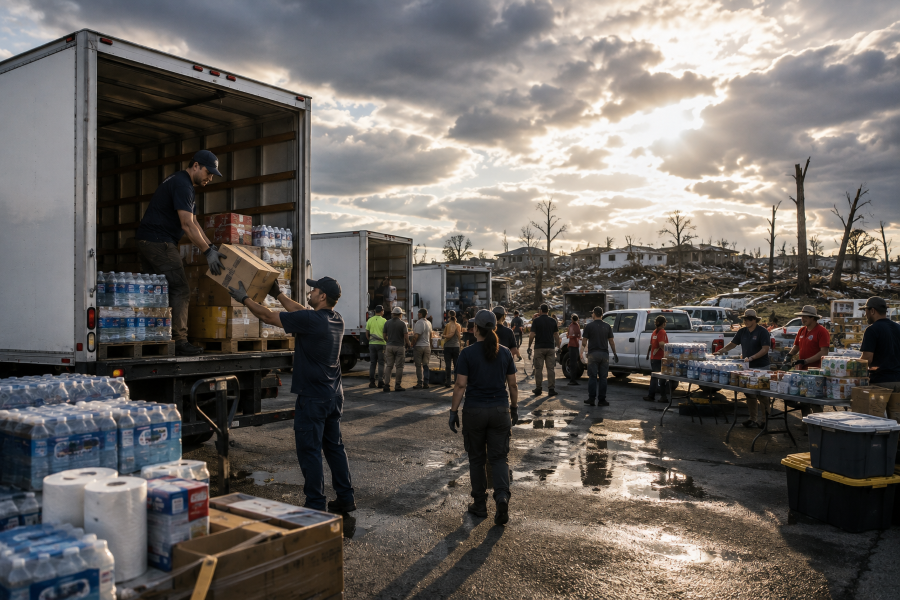
When disaster strikes, every hour matters. Emergency response organizations must quickly move people, medical supplies, food, water, equipment, and other critical resources into affected communities—often while infrastructure is damaged and transportation demand is surging. Having access to the right vehicles at the right time can make the difference between delays and rapid response.
Truck rental gives disaster relief organizations the flexibility to quickly expand fleet capacity without maintaining excess vehicles year-round. Whether supporting hurricane recovery, wildfire response, flood relief, or other emergencies, rental fleets help teams mobilize faster and keep critical operations moving when communities need them most.
Continue reading to find out why disaster relief transportation is critical during emergencies, which fleet challenges can delay response, and how organizations can build a stronger transportation strategy.
Why Transportation Is Critical During Disaster Response
Disaster response depends on trained personnel, clear plans, and reliable transportation. Supplies and equipment may already be available, but they won’t help unless they reach the areas where they’re needed.
Transportation supports the movement of several essential resources:
- Supplies: Blankets, generators, fuel, batteries, and hygiene kits must reach shelters and distribution points quickly.
- Volunteers: Volunteers need dependable transportation to reach affected areas and support local response teams.
- Equipment: Utility tools, restoration equipment, and heavy machinery help clear debris and restore essential services.
- Food: Shelters, response teams, and displaced residents may depend on food deliveries until normal supply chains resume.
- Water: Clean drinking water must reach affected areas when local water systems are damaged or contaminated.
- Temporary shelter materials: Cots, tents, generators, lighting, and sanitation equipment help support temporary accommodation sites.
- Medical resources: Medications, protective equipment, and mobile healthcare supplies must reach medical teams without unnecessary delays.
However, transportation can quickly become a bottleneck. Damaged roads, route closures, fuel shortages, and limited vehicle availability can slow the movement of people and supplies.
As a result, delays can affect restoration work, medical support, shelter operations, and the delivery of essential resources.
A strong disaster relief transportation plan therefore needs to account for fleet capacity, route access, vehicle availability, and backup options before an emergency occurs.
The Biggest Fleet Challenges During Emergencies
Emergency response places heavy pressure on transportation operations. Demand can increase without warning, vehicles may need to be deployed across several states, and organizations still have to maintain essential services during the response.
Common fleet challenges include:
- Unexpected demand: Disasters can create an immediate need for additional vehicles that exceeds the capacity of an existing fleet.
- Seasonal spikes: Hurricane, wildfire, flood, and severe storm seasons can increase demand for trucks across several regions at the same time.
- Vehicle shortages: Damaged fleets and higher demand can make it harder to secure the right vehicles when they’re needed.
- Maintenance downtime: Routine servicing and unexpected mechanical issues can reduce fleet availability during critical response periods.
- Multi-state deployments: Large-scale emergencies often require vehicles, equipment, and personnel to support operations across several states.
- Rapid mobilization: Emergency teams may need additional vehicles within hours, leaving little time to locate available fleet capacity.
- Business continuity: Utilities, healthcare providers, telecommunications companies, restoration contractors, and government agencies must continue serving customers while supporting emergency response efforts.
These challenges can quickly stretch fleets beyond their normal capacity. Purchasing enough vehicles to cover every possible emergency isn’t practical for most organizations because much of that capacity may sit unused outside disaster season.
Proactive fleet planning and flexible commercial truck rental solutions help reduce disruptions and keep critical operations moving when every minute counts.
Why Rental Is an Important Part of Emergency Fleet Planning
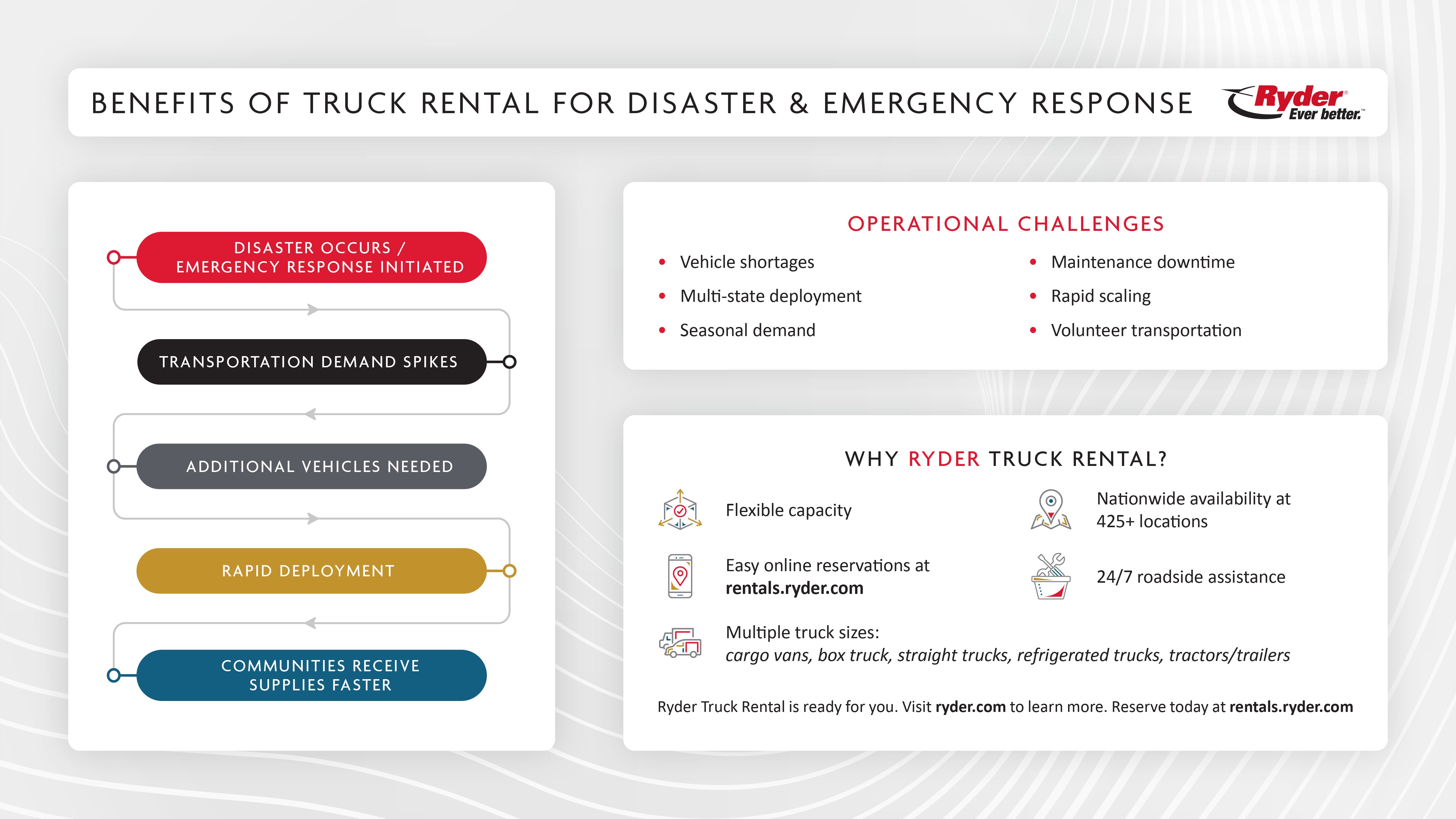
Emergency fleet needs can change within hours, and permanent fleets aren’t always large enough to handle sudden demand.
Emergency response truck rental gives organizations access to extra vehicles without requiring them to purchase and maintain assets that may only be needed for a limited period.
Rental can support emergency fleet planning in several ways:
- Avoid idle assets: Organizations don’t have to purchase vehicles that may remain unused for much of the year.
- Scale quickly: Additional vehicles can be added when response operations expand or demand rises unexpectedly.
- Support temporary demand: Short-term rentals provide extra capacity without creating long-term ownership costs.
- Deploy faster: Ready-to-rent vehicles can help teams mobilize sooner and reduce delays during critical response periods.
- Access national support: A broad rental network can help organizations secure vehicles across several regions.
- Reduce maintenance responsibilities: Rental providers manage routine servicing and maintenance, which reduces pressure on internal fleet teams.
- Choose from several vehicle classes: Organizations can select cargo vans, box trucks, pickup trucks, stake trucks, and other vehicles based on the task.
Rental works best when it’s included in the plan before disaster season begins. Prearranged agreements, clear approval processes, and known pickup locations can help organizations secure vehicles faster when demand increases.
Temporary truck rental doesn’t replace the primary fleet. It adds the flexibility organizations need to respond to changing conditions without carrying excess fleet capacity throughout the year.
Vehicle Types Commonly Used During Disaster Relief
Disaster response rarely relies on a single type of vehicle. Different missions require different equipment, whether teams are transporting emergency supplies, restoring utilities, supporting healthcare services, or delivering materials to temporary shelters.
Choosing the right vehicle for each task helps improve efficiency, protect cargo, and keep response operations moving.
Here are some of the most common vehicles used during disaster relief:
- Cargo vans: Ideal for transporting medical supplies, tools, communications equipment, personal protective equipment (PPE), and other smaller deliveries. Their compact size also makes them well suited for urban areas and locations where larger trucks may be difficult to maneuver.
- Box trucks: Provide enclosed cargo space for food, bottled water, generators, cots, hygiene kits, and other emergency supplies. They help protect cargo from the elements while making loading and unloading more efficient at shelters, staging areas, and distribution centers.
- Straight trucks: Commonly used to transport larger equipment, utility restoration materials, construction supplies, and palletized freight. Their higher payload capacity makes them a practical choice for supporting recovery operations across multiple locations.
- Stake trucks: Designed to carry oversized or irregular loads that don't fit easily inside enclosed vehicles, including lumber, pipes, fencing, sandbags, debris removal equipment, and other infrastructure repair materials. Their open design allows crews to load and unload materials quickly in the field.
- Refrigerated vehicles: Help maintain the proper temperature for medications, vaccines, fresh food, and other perishable products. They're especially important when power outages affect cold storage facilities or supplies that need to travel long distances.
- Pickup trucks: Provide flexible transportation for field crews, allowing them to move personnel, tools, emergency equipment, generators, and smaller loads between job sites. They're also well suited for reaching locations where larger commercial vehicles may have limited access.
No single vehicle can support every disaster response need. Access to a diverse fleet allows organizations to match the right vehicle to each assignment, improve resource allocation, and respond more effectively as operational needs change.
How to Build a More Resilient Transportation Strategy
A resilient transportation strategy starts long before disaster season. Organizations need to understand their transportation requirements, identify potential gaps, and establish a plan that allows them to respond quickly when normal operations are disrupted.
A business continuity transportation plan should include the following elements:
- Primary fleet: The primary fleet supports day-to-day operations and forms the foundation of any emergency response plan. Organizations should identify which vehicles will be prioritized during an emergency to help keep critical services running.
- Backup rental provider: A prearranged relationship with a truck rental provider makes it easier to secure additional vehicles when demand exceeds existing fleet capacity. Establishing those agreements in advance also reduces delays when every hour matters.
- Maintenance strategy: Preventive maintenance helps improve fleet reliability and reduces the risk of unexpected breakdowns during emergency response. Regular inspections and scheduled servicing also keep more vehicles available when demand increases.
- Regional deployment plans: Positioning vehicles near high-risk areas or strategic locations can improve response times and support operations across multiple regions. Deployment plans should also account for alternate routes, fuel availability, and coordination between response teams.
- Seasonal planning: Hurricane, wildfire, flood, and severe storm seasons create predictable periods of increased transportation demand. Reviewing fleet capacity before these events allows organizations to secure additional vehicles, allocate resources effectively, and prepare for changing operational needs.
Organizations that invest in hurricane fleet planning can respond with greater speed and confidence when disasters occur. Furthermore, companies with the most mature supply chains are 23% more profitable than their peers, according to Accenture research.
What to Look for in a Transportation Partner
Choosing a transportation partner isn’t only about finding vehicles when an emergency occurs. The right provider should have the fleet, infrastructure, and operational support needed to help organizations respond quickly and maintain continuity as conditions change.
When evaluating a transportation partner, consider the following capabilities:
- National footprint: A provider with locations across multiple regions can support deployments where vehicles are needed and help organizations respond across a wider geographic area.
- Fast deployment: Emergencies leave little time to secure additional fleet capacity. A transportation partner should be able to mobilize vehicles quickly to reduce operational delays.
- Fleet variety: Access to multiple vehicle classes makes it easier to match the right equipment to each task, whether transporting personnel, emergency supplies, utility equipment, or restoration materials.
- Maintenance support: Reliable maintenance and roadside assistance help keep vehicles operating throughout the response and reduce downtime when fleet availability is critical.
- Scalability: Transportation needs can change rapidly during an emergency. A provider should be able to increase or reduce fleet capacity as operations evolve.
- 24/7 support: Disaster response doesn’t stop after business hours. Around-the-clock support helps organizations resolve transportation issues quickly and keep operations moving.
The relationship shouldn’t begin when disaster strikes. Establishing a transportation partnership before an emergency gives organizations time to evaluate fleet requirements, define deployment procedures, and prepare for periods of increased demand. That planning can make a real difference when every hour counts.
Strengthen Emergency Response With Ryder Truck Rental
Emergency preparedness depends on more than emergency supplies and response plans. Organizations also need transportation capacity that can adapt quickly when disasters disrupt normal operations.
Planning ahead helps mitigate supply chain disruptions, strengthen business continuity, and improve the movement of personnel, equipment, and critical supplies when they're needed most. It also gives organizations greater confidence that they can scale transportation resources as operational demands change.
Ryder Truck Rental supports emergency transportation planning with a nationwide rental network, a diverse fleet of commercial vehicles, and flexible rental solutions that help organizations respond when additional capacity is needed.
Ready to strengthen your emergency fleet strategy? Learn how Ryder Truck Rental helps organizations quickly scale transportation capacity and keep critical operations moving when operational demands change.