Logistics
Warehousing & Fulfillment
Transportation
E-commerce
E-commerce Fulfillment Services
Lease & Maintenance
Semi Trucks
Supply Chain Technology
Fleet Management Technology
Logistics
E-commerce
Lease & Maintenance
Buy Used Trucks
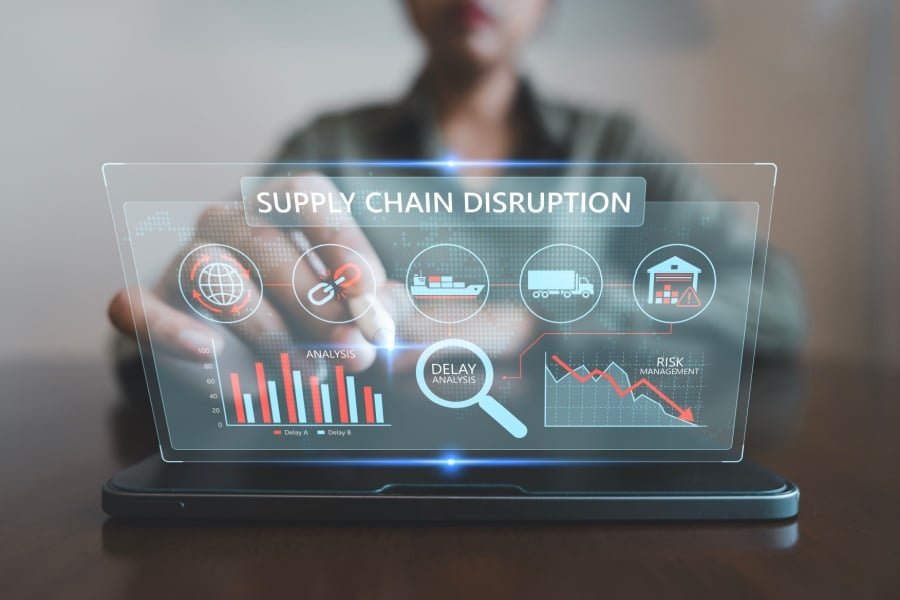
Supply chain inefficiencies are often underestimated because they are not always immediately visible. While transportation delays or rising warehousing costs tend to draw attention, they represent only a small portion of the total impact.
The majority of inefficiencies exist beneath the surface, quietly affecting multiple areas of operations.
According to Crebo, companies can lose up to 20–30% of their operating costs each year due to inefficiencies. For a mid-sized business, this can translate to hundreds of thousands of dollars in lost value annually. Despite this, many organizations continue to focus on isolated issues instead of addressing the system as a whole.
The true cost of inefficiencies extends beyond logistics expenses. It affects revenue, productivity, customer experience, and long-term scalability. When these inefficiencies are not clearly identified, they tend to persist, creating a cycle of recurring issues that gradually increase overall supply chain costs and erode performance.
That’s why, in this article, we’ll explore where inefficiencies tend to hide, how they translate into measurable costs, and the signs that indicate your supply chain may be underperforming.
We’ll also outline practical steps to build a robust risk management framework that improves supply chain efficiency and helps reduce inefficiencies across operations.
Supply chain inefficiencies rarely originate from a single source. Instead, they develop across multiple functions, where small performance gaps accumulate over time and create larger operational challenges.
Key areas where inefficiencies commonly exist include:
Addressing inefficiencies in these areas requires a shift from reactive problem-solving to a more structured, system-level approach.
While inefficiencies may appear operational, their impact is ultimately financial. When broken down, they reveal how everyday disruptions reduce profitability over time.
The most significant cost drivers include:
These costs often accumulate gradually, making them harder to detect until they begin to significantly impact margins.
Underperformance is rarely sudden. Most supply chains show clear warning signs before larger failures occur, but these signals are often overlooked.
Common indicators include:
1. Frequent disruptions: Repeated delays, supplier issues, or operational breakdowns indicate a lack of stability within the supply chain.
2. Lack of visibility: Limited access to real-time supply chain data makes it difficult to identify issues or respond quickly, forcing teams into reactive decision-making.
3. Rising costs without growth: Increasing expenses without corresponding growth in output or revenue suggest inefficiencies are driving up operational costs.
Recognizing these signs early allows businesses to address underlying issues before they escalate.
Addressing inefficiencies requires more than isolated fixes. It involves building a structured framework that improves coordination and performance across the entire supply chain.
Key areas of focus include:
When applied together, these strategies create a more resilient and cost-effective supply chain.
Reducing inefficiencies requires both visibility and execution. Ryder supports this by leveraging advanced technology, including predictive analytics, to help organizations identify hidden cost drivers and implement more efficient operational models.
A total cost of ownership (TCO) study conducted by Ryder and KPMG LLP demonstrates the financial impact of optimized fleet strategies. The analysis found that ownership costs average $0.80 per mile, while leasing averages $0.65 per mile, resulting in up to 19% cost savings.
Beyond direct cost reductions, improved asset management and reduced downtime contribute to higher productivity and more consistent operations. By minimizing disruptions and improving coordination, businesses can operate more efficiently across their supply chain.
These improvements extend beyond individual functions, supporting broader supply chain optimization and long-term performance gains.
Supply chain inefficiencies often remain hidden until they are measured and understood. While they may appear as isolated operational issues, their true impact is cumulative, affecting revenue, costs, and overall performance.
By improving visibility and addressing system-level inefficiencies, businesses can move from reactive operations to a more controlled and efficient model. This not only helps to reduce supply chain costs, but also creates a stronger foundation for growth.
With the right strategy and support, inefficiencies can be identified, measured, and resolved, turning hidden costs into measurable gains.
Ready to identify hidden inefficiencies and reduce logistics costs across your operations?
Explore how Ryder helps improve supply chain efficiency through data-driven insights and integrated solutions.