Logistics
Warehousing & Fulfillment
Transportation
E-commerce
E-commerce Fulfillment Services
Lease & Maintenance
Semi Trucks
Supply Chain Technology
Fleet Management Technology
Logistics
E-commerce
Lease & Maintenance
Buy Used Trucks
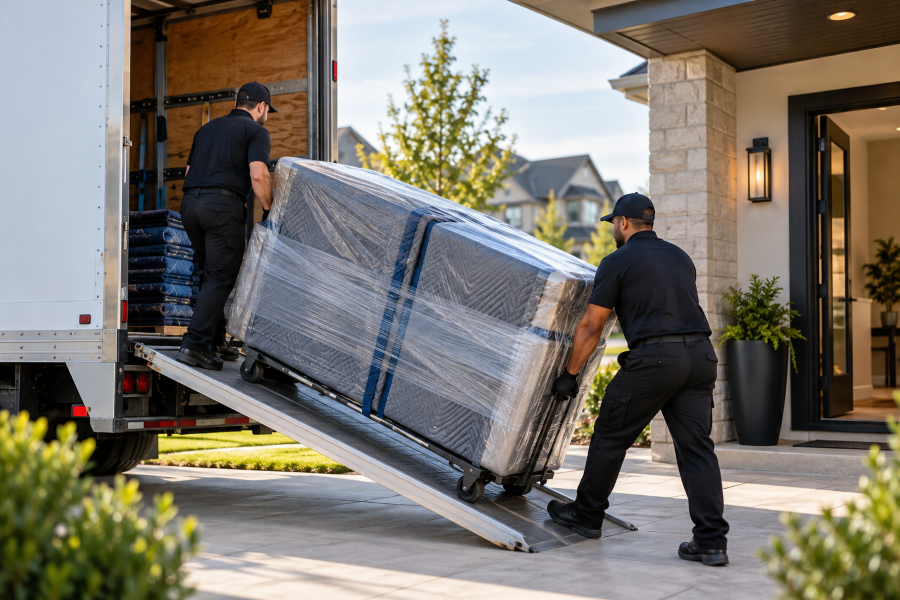
Your customer doesn’t see your warehouse. They don’t see your transportation network. They don’t see the planning, forecasting, labor management, or inventory decisions behind the scenes.
They see one thing: whether their order arrives on time and damage free.
That moment of delivery is where your supply chain becomes visible. It’s also where customer expectations, operational execution, and brand perception collide. For retailers, e-commerce brands, and supply chain leaders, last mile delivery is no longer just a transportation function. It’s a direct extension of the customer experience.
And while the expectation may seem simple — deliver quickly, accurately, and with visibility — meeting that expectation is anything but easy.
Behind every successful delivery is a highly coordinated effort involving inventory positioning, routing, labor, communication, technology, and execution. The challenge is that the last mile is often the most unpredictable, fragmented, and expensive part of the supply chain.
Companies that don’t solve for that complexity risk more than delayed orders. They risk higher costs, lower efficiency, and a customer experience that falls short at the exact moment it matters most.
Last mile delivery is one of the most difficult parts of the supply chain to manage consistently. It sounds straightforward on paper. Get the order to the customer’s door. In practice, it’s not that easy.
Many companies rely on a mix of carriers, local providers, internal fleets, and regional delivery models to meet customer demand. That can create flexibility, but it can also create inconsistency.
Different geographies may operate differently. Service levels may vary by market. Visibility may be stronger in some locations than others. And when delivery networks are built across disconnected providers and systems, standardization becomes difficult.
The result is a last mile operation that can feel reactive instead of coordinated.
Unlike long-haul transportation, the final mile happens in the most variable environments. Traffic congestion, weather disruptions, construction delays, apartment access issues, and regional delivery constraints can all affect performance.
Urban deliveries bring density and time pressure. Rural deliveries bring distance and lower route efficiency. Even when planning is strong, real-world conditions can disrupt execution quickly.
That unpredictability makes consistency hard to achieve without the right systems and operational discipline in place.
Customers expect speed. They expect accurate ETAs. They expect real-time tracking. They expect narrow delivery windows and proactive communication if something changes.
For many brands, those expectations are being shaped not just by direct competitors, but by every fast, transparent delivery experience customers have anywhere in the market.
That means even small breakdowns can feel much bigger from the customer’s point of view.
Last mile delivery is often the most labor-intensive and cost-sensitive segment of the fulfillment journey. It involves shorter routes, more stops, tighter windows, and more opportunities for failed delivery attempts or service exceptions.
Every reattempt adds cost. Every inefficient route adds time and fuel. Every communication gap creates friction for both the customer and the delivery team.
The closer you get to the customer, the more complexity — and cost — enters the equation.
When companies think about last mile challenges, they often focus on the obvious issues first: late deliveries, missed windows, or customer complaints. But the true cost of last mile complexity runs deeper.
A failed delivery doesn’t just create a one-time service issue. It can trigger additional labor, added miles, rescheduling complexity, and customer dissatisfaction all at once.
What looked like a single missed delivery can quickly become a much more expensive operational problem.
When routing is suboptimal, schedules are inconsistent, or delivery data is incomplete, labor productivity suffers. Drivers spend more time waiting, rerouting, or handling preventable issues. Dispatch teams spend more time reacting instead of optimizing.
Over time, those inefficiencies compound and drive up cost across the network.
Customers may be willing to tolerate the occasional delay. What they are less likely to tolerate is uncertainty.
When they do not know where an order is, when it will arrive, or what to expect next, frustration builds fast. A delivery issue becomes a communication issue, and then a brand issue.
The delivery experience can shape how customers view your business long after the order is complete. Late arrivals, lack of updates, or inconsistent service can lead to negative reviews, lower repeat purchase rates, and declining trust.
Last mile challenges do not just impact operations. They directly impact revenue and brand perception.
Best-in-class last mile delivery is about building a smarter, more connected delivery operation. It encompasses several things: (H3) Real-Time Visibility
Best-in-class last mile operations give businesses the ability to track deliveries in real time, monitor exceptions, and respond before small issues become larger ones.
Visibility helps operations teams stay informed, but it also supports a better customer experience by reducing uncertainty and enabling more accurate communication.
This is why many companies are investing more heavily in end-to-end visibility across the supply chain, not just at isolated points in the process.
Efficient route planning is one of the clearest opportunities to improve delivery performance. Better route optimization can reduce miles, improve stop density, lower labor inefficiencies, and help increase on-time performance.
It is not just about speed. It is about using time, labor, and transportation capacity more effectively.
Customers want updates before they have to ask for them. Best-in-class last mile delivery includes proactive notifications, accurate delivery windows, and communication that helps customers prepare for arrival.
That kind of transparency improves confidence and reduces friction on both sides of the delivery experience.
The strongest last mile strategies are not built as standalone delivery functions. They are connected to fulfillment, inventory, transportation, and broader supply chain planning.
When those pieces work together, delivery performance improves because the network is designed to support it from the beginning.
Best-in-class last mile is not about moving faster. It is about moving smarter.
Ryder helps businesses solve last mile delivery challenges by connecting execution, technology, and network integration.
With RyderView™, businesses gain real-time delivery visibility that helps teams track orders, monitor performance, and stay ahead of issues. That visibility also supports a better customer-facing experience through clearer updates and more transparent delivery information.
When customers know what is happening, and operations teams can see what is happening, delivery becomes easier to manage and easier to trust.
Last mile performance does not begin at dispatch. It begins upstream with the way inventory is positioned, orders are fulfilled, and transportation is coordinated.
Ryder connects last mile to the bigger supply chain, including fulfillment, transportation, and inventory strategy. That integration can help reduce handoff issues, improve delivery readiness, and create a more consistent experience from order to doorstep.
It is the same connected thinking that matters in broader e-commerce fulfillment strategies, especially for brands trying to scale without increasing operational complexity.
Technology matters, but it is only part of the equation. Last mile performance also depends on execution.
Ryder brings the operational expertise, driver networks, route optimization capabilities, and process discipline needed to deliver more consistently across markets. That helps reduce cost, simplify complexity, and minimize customer friction at the point of delivery.
Too often, last mile is treated as the final step in the process rather than a connected outcome of everything that came before it.
But last mile can’t operate in isolation.
If inventory is in the wrong place, delivery suffers. If fulfillment is disconnected from transportation planning, delivery suffers. If systems do not communicate, teams lose visibility and customers lose confidence.
That is why strong last mile performance depends on end-to-end coordination. It requires integration across warehousing, transportation, visibility platforms, and execution teams.
For many businesses, that broader strategy also includes a more connected port-to-door approach, where supply chain decisions upstream are aligned with downstream delivery performance.
The best last mile strategies are not built at the last mile. They are built across the entire supply chain.
For leaders looking to improve last mile performance, the first step is not guessing. It is evaluating where breakdowns are happening today.
Ask questions like:
From there, the goal should be to identify opportunities to simplify, connect, and optimize. That may mean improving delivery visibility, redesigning routing strategies, tightening coordination between fulfillment and transportation, or evaluating whether a more integrated last mile model could improve performance.
The companies that make progress are usually the ones that stop treating last mile as a narrow delivery issue and start treating it as a strategic supply chain priority.
Last mile delivery is where your supply chain meets your customer and where your brand is defined. It’s also one of the most complex parts of the entire operation. Rising expectations, fragmented networks, unpredictable conditions, and cost pressure can all make the final mile difficult to manage.
But companies that solve that complexity create a real advantage. They improve efficiency. They reduce customer friction. They strengthen trust. And they position themselves to win on both cost and customer experience.