Logistics
Warehousing & Fulfillment
Transportation
E-commerce
E-commerce Fulfillment Services
Lease & Maintenance
Semi Trucks
Supply Chain Technology
Fleet Management Technology
Logistics
E-commerce
Lease & Maintenance
Buy Used Trucks
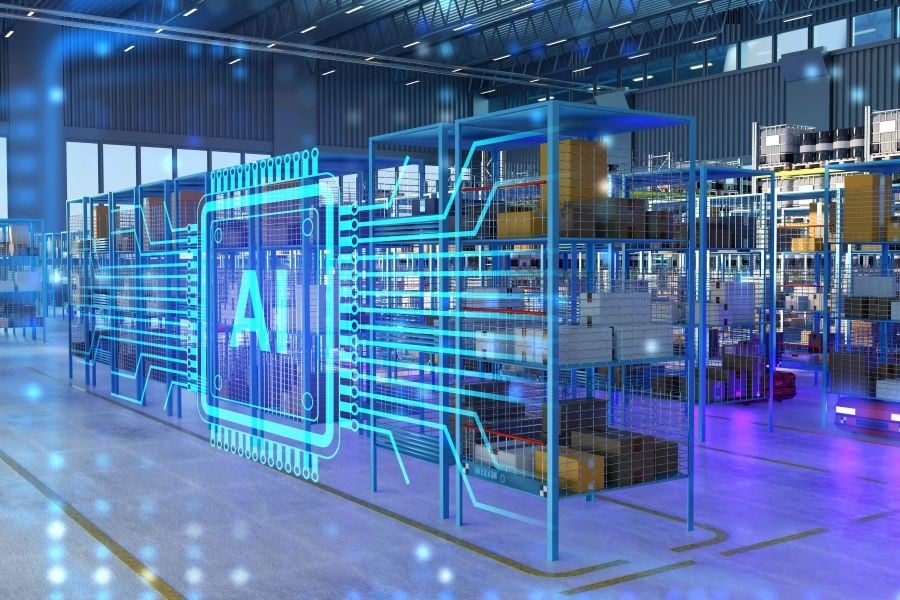
AI is rapidly becoming a core part of modern supply chain operations. Companies are moving beyond experimentation and applying AI to solve everyday challenges across transportation, warehousing, fleet management, and customer service. From predicting disruptions before they happen to automating workflows and improving real-time decision-making, AI is helping supply chains operate faster, smarter, and with greater precision. As adoption accelerates, scaling it correctly to fit your operations remains a challenge.
According to Gartner, organizations will abandon up to 60% of AI projects through 2026 due to a lack of AI-ready data. In supply chain operations, the impact is even more pronounced because AI initiatives often depend on fragmented transportation systems, inconsistent warehouse data, and disconnected fleet platforms.
Many AI supply chain initiatives never move beyond pilot stages because they are not connected to core operations. Insights remain isolated, and teams are left with more data but no clear way to act on it. Instead of improving performance, these efforts often introduce complexity and slow down decision-making.
Real progress comes from embedding AI directly into supply chain operations, where intelligence becomes part of daily workflows across transportation, warehousing, and fleet management.
When applied correctly, AI supports faster decisions, automates routine processes, and drives measurable improvements in cost, service, and visibility.
Ryder’s approach reflects that philosophy by integrating AI across its platforms that delivers consistent, scalable outcomes.
Continue reading to learn how AI in supply chain operations moves from visibility to action, scales across the network, and delivers measurable results through real-world use cases.
Supply chains generate vast amounts of data every day, yet access to information alone does not improve performance. The real challenge lies in turning that data into timely decisions that can influence outcomes while operations are still in motion.
Many systems focus on reporting, which leaves teams reacting after disruptions have already occurred.
Ryder applies real-time supply chain optimization AI to support decision-making directly within operational workflows. Instead of relying on static reports, teams are equipped with insights that guide actions as conditions change.
Key capabilities include:
Greater alignment between data and action allows operations to run more efficiently, with fewer delays and more consistent performance across the supply chain.
Meaningful impact requires intelligence to operate across the entire supply chain rather than within isolated functions.
Individual use cases can deliver improvements, but consistent performance comes from connecting those insights across systems, teams, and workflows.
Ryder embeds AI across its core solutions so intelligence flows seamlessly between transportation, warehousing, and fleet operations. This creates alignment between planning, execution, and delivery outcomes while reducing fragmentation.
AI is deployed across:
When intelligence operates at scale, improvements in one area reinforce performance across the network, creating a more connected and efficient supply chain.
Practical application defines the value of AI in supply chain operations. Rather than focusing on abstract capabilities, Ryder prioritizes use cases that improve execution, accuracy, and efficiency across daily workflows.
Key applications include:
AI-driven arrivals and departures continuously refine estimated delivery times using real-time data, improving accuracy and strengthening coordination between operations and customers.
AI route optimization software evaluates traffic conditions, demand patterns, and constraints to determine efficient routes. Backhaul matching reduces empty miles and improves asset utilization, with machine learning models driving utilization gains.
AI agents streamline high-volume communication workflows by summarizing cases and routing them to the appropriate teams, reducing response times and improving operational efficiency.
Intelligent document processing standardizes and extracts key data from business documents at scale, reducing manual errors and accelerating processing across financial and operational functions.
Consistent application of these capabilities enables faster, more accurate, and more efficient supply chain performance across the organization.
AI creates value when it becomes part of how supply chains operate day-to-day.
When intelligence is embedded in transportation, warehousing, and fleet management, teams can respond faster, work more efficiently, and make better decisions with greater confidence.
For many organizations, the challenge is not whether to use AI, but how to apply it in a way that delivers consistent results without adding unnecessary complexity. That requires an approach built around real operational needs, not isolated tools or one-off use cases.
Ryder supports that approach by integrating AI directly into supply chain operations through RyderAI which connects data, systems, and workflows. The result is a more controlled, visible, and efficient operation that can scale with demand.
Explore how Ryder can help you apply AI in supply chain operations to improve performance, reduce inefficiencies, and operate with greater clarity across your network.